

This is a carousel with zoom. Use the thumbnails to navigate, or jump to a slide. Use the zoom button to zoom into a image.
Low stock


Nierstein Oelberg Riesling Trocken, Louis Guntrum 2018
White Wine from Germany - Rheinhessen
Oelberg is at the heart of Nierstein on its famous red slate soil, which gives wines of splendid fruit and depth capable of lasting for ten-years plus. Konstantin Guntrum has revitalised this famous estate which is once again well worth following. Guntrum decided to simplify the labelling for this wine in order to avoid confusing people with a dry Spätlese, but the wine is indeed Spätlese-level quality fermented out to be dry. 5g/l residual sugar.
Price:
£24.50
Bottle
(£32.67/litre)
Price:
£147.00
Case of 6
(out of stock)
Low stock
Code: GE16081
Wine characteristics
- White Wine
- 2 - Dry
- Riesling
- 75cl
- Now to 2029
- 13% Alcohol
- no oak influence
- Screwcap
Bestselling wines

The Society's Loire Sauvignon Blanc 2025
France
12% vol
Sauvignon Blanc
Blended from across the Loire in the warm 2025 vintage The Society's Loire Sa...
Price:£8.95
Bottle
(£11.93/litre)
Price:£107.00
Case of 12
(£11.89/litre)

Bando de Corvos ‘Murder of Crows’ Tinto, Lisboa 2024
Portugal
13.5% vol
This wine is sourced from vineyards close to the city of Lisbon and is a blen...
Price:£7.95
Bottle
(£10.60/litre)
Price:£95.00
Case of 12
(£10.56/litre)

Sangiovese-Primitivo Cielo Via Mare, Puglia 2025
Italy
12.5% vol
Sangiovese
A bright and generous 2025, with ripe red cherry and strawberry lifted by a t...
Price:£8.25
Bottle
(£11.00/litre)
Price:£49.50
Case of 6
(£11.00/litre)

Baccolo Appassimento Rosso Veneto 2024
Italy
13.5% vol
Merlot
A members favourite, this popular Veneto red's opulent style is achieved by p...
Price:£9.50
Bottle
(£12.67/litre)
Price:£57.00
Case of 6
(£12.67/litre)

The Society's Southern French Rosé, Pays d'Oc 2025
France
12.8% vol
Petit Verdot
Bursting with ‘fuzzy peach joy’, complemented by a ‘very slight bitterness th...
Price:£8.95
Bottle
(£11.93/litre)
Price:£107.00
Case of 12
(£11.89/litre)
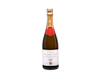
The Society's Celebration Crémant de Loire 2023
France
12% vol
Chenin Blanc
This elegant, refined sparkling wine is made for The Wine Society by Gratien ...
Price:£13.95
Bottle
(£18.60/litre)
Price:£83.50
Case of 6
(£18.56/litre)

The Society's Verdicchio Classico 2025
Italy
11.5% vol
Verdicchio
One of Italy's best buys, verdicchio makes vibrant, crisp and refreshing wine...
Price:£9.50
Bottle
(£12.67/litre)
Price:£114.00
Case of 12
(£12.67/litre)

The Society's Rioja Crianza 2021
Spain
14.5% vol
Tempranillo
Rioja is Spain's pre-eminent wine region, renowned for its graceful, stylish ...
Price:£10.95
Bottle
(£14.60/litre)
Price:£131.00
Case of 12
(£14.56/litre)
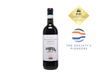
The Society's Montepulciano d'Abruzzo 2024
Italy
13% vol
Montepulciano
A 2026 Wine Champion, this cherry-laden Italian favourite is now made for us ...
Price:£9.25
Bottle
(£12.33/litre)
Price:£111.00
Case of 12
(£12.33/litre)

The Society's Côtes-du-Rhône 2025
France
13.5% vol
Grenache Syrah
We have been working with the Jaume family for over 25 years and their wines ...
Price:£9.95
Bottle
(£13.27/litre)
Price:£119.00
Case of 12
(£13.22/litre)
Louis Guntrum
The Louis Guntrum who founded this property in the 17th century, was a French Huguenot who fled France to escape Catholic oppression and settled in Benzheim. Guntrum subsequently crossed the river to Nierstein and bought vines in Nierstein Pettenthal and Hipping, which in hot years make finer wine than their more famous vines in Nierstein Orbel and Oelberg. Today, the company is run by the 11th generation, Louis Konstantin Gunstrum.
The Nierstein Pettenthal vineyard is part of the Rhein-Terrasse – the steep, south-east-facing vineyards planted on red sandstone on the banks of the Rhine, which are considered by some to be ranked among the finest vineyards in Germany. The Nierstein Orbel and Oelberg vineyards are south-facing and planted on clay soils, and the property also has vines in Oppenheimer Sacktrager, a south-facing amphitheatre of clay-loam sheltered by the surrounding hills.
Only traditional grapes are grown, such as riesling, silvaner, spätburgunder (pinot noir) and gewürztraminer. Much of the steeper vines are hand-picked to ensure only the best fruit is selected, but the property also uses machine harvesting in some of its less difficult vineyard sites.
The cellars, built by the 8th generation of the family in 1923, are on the bank of the Rhine between Oppenheimer and Nierstein. Wines are fermented in stainless-steel tanks, with no oak used in order to retain their natural fresh fruit character.