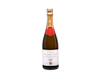
Boekenhoutskloof Syrah, Swartland 2016 is no longer available

This is a carousel with zoom. Use the thumbnails to navigate, or jump to a slide. Use the zoom button to zoom into a image.

Sold Out

Boekenhoutskloof Syrah, Swartland 2016

Red Wine from South Africa - Coastal Region
0 star rating 0 Reviews
Boekenhoutskloof Syrah is one of the finest – and most pivotal – syrahs of the Cape, and has the longest track record, with the inaugural 1997 vintage redefining what South African expressions of this grape could be. The 2016 was just the second year that the wine was Wine of Origin Swartland – and was cellarmaster Gottfried Mocke’s first vintage – with the fruit sourced (as it is today) from both the Porseleinberg (80%) and Goldmine (20%) vineyards. A season of extreme heatwaves, which turned out to be the first of a run of drought vintages, required green harvesting to minimise yields and reduce vine stress. A decade on, this is drinking beautifully, with delicious savoury character – cured meat and leathery development – emerging, interwoven with black plum, blackberry and warming spices. The tannins are seamless, with a silken-like feel and, defying the season perhaps, a wonderfully fresh seam of acidity runs through the wine. Tasted by our buyer twice in the last year, this is in perfect drinking territory now, offering that delicious interplay of both primary berry fruit and pepper, and the beginnings of tertiary flavours. Mid-weight, elegant and effortlessly balanced – there is a gentleness to this syrah’s demeanour – it has fantastic length and an almost salty finish.
is no longer available
Code: SA14811

Wine characteristics

  • Red Wine
  • Full-bodied
  • Syrah/Shiraz
  • Now to 2031
  • 14% Alcohol
  • no oak influence
  • Cork, natural

Bestselling wines

South Africa

South Africa is undoubtedly one of the world's most dynamic wine producers. Established winemakers re-emerged onto the international scene in the early 1990s, following the demise of the apartheid era, and new wines, wineries, highly qualified winemakers, and even new regions have appeared steadily ever since. This makes South Africa more exciting than ever, but more complicated, too.

Most South African wines are varietally labelled - a key factor in any buying decision. Styles vary of course, and our notes aim to clarify this, but you will probably already know whether you like sauvignon blanc (now among the world's best), chardonnay, riesling, syrah, pinot noir, or cabernet.

South Africa's most famous grapes - white chenin blanc and red pinotage - will be less familiar unless you are already a convert. South African chenins are quite different from those in the Loire - almost always dry, but ripe and full of flavour (often with the complexity that comes from the increasingly...
South Africa is undoubtedly one of the world's most dynamic wine producers. Established winemakers re-emerged onto the international scene in the early 1990s, following the demise of the apartheid era, and new wines, wineries, highly qualified winemakers, and even new regions have appeared steadily ever since. This makes South Africa more exciting than ever, but more complicated, too.

Most South African wines are varietally labelled - a key factor in any buying decision. Styles vary of course, and our notes aim to clarify this, but you will probably already know whether you like sauvignon blanc (now among the world's best), chardonnay, riesling, syrah, pinot noir, or cabernet.

South Africa's most famous grapes - white chenin blanc and red pinotage - will be less familiar unless you are already a convert. South African chenins are quite different from those in the Loire - almost always dry, but ripe and full of flavour (often with the complexity that comes from the increasingly sought-after old-vine fruit and the use of oak). Pinotage, a South African creation, is for many a love-it-or-hate-it grape. Pinotage's 'parents' are pinot noir, which imparts its strawberry aromas and lovely texture in young wines, and more complex, farmyard characteristics in more mature examples, and cinsault, the southern French grape, which adds spice and body. It was developed in South Africa in 1926. Shiraz is now making a name for itself in South Africa with some superb examples bottled varietally and showing characteristics that often places it between the plush New World style pioneered by Australia and classic Rhône balance and elegance.

More significant in South Africa than much of the New World (notably New Zealand and Chile) are blends, which make selection more complicated, as the style of the wine is less easy to anticipate. As in Australia and California, however, many of the best wines here are blends - a sign of maturity in the industry. Bordeaux blends were favoured initially but there are increasing numbers of Rhône and southern French influenced blends, including some eclectic mixes, many of which are among South Africa’s best wines.

The Regions

The vineyards of South Africa are at a latitude of about 35o south, with hot, dry Mediterranean-type summers tempered by oceanic influences in the south, particularly the very cold Benguela Current. Much of the country is mountainous or hilly with a multitude of terroirs for winemakers to play with. Soils are ancient and complex, and many and varied from region to region, and even vineyard to vineyard. Rainfall is very varied from one area to another, largely depending which side of a mountain or range a vineyard lies on, and in some parts irrigation is essential.

South Africa’s rigorous Wine Of Origin scheme demarcates vineyard areas, including some single vineyards, and guarantees the geographical source of the wine much like the old French appellation contrôllée system recently renamed AOP, though there are no controls on yields and grape varieties as there are in France..

Bordeaux-style blends are one of the Stellenbosch region's great strengths. Wines such as Kanonkop's Paul Sauer, Meerlust's Rubicon and Warwick's Trilogy are South African icons, produced over many years, and with proven ageing capacity. The striking Simonsberg mountain names the ward (or area) most highly sought after for these reds, but Stellenbosch produces a wide range of wine styles, from excellent chenin blancs and sauvignons to robust pinotage and Cape Blends.

Paarl is its less-well-known neighbour, also warm, and best known for its robust but smooth reds. Franschhoek is understandably one of the most-visited towns in the Cape (with lots of French Huguenot history and some of the best restaurants in the region). It has a number of famous producers, most notably Boekenhoutskloof, but most do not produce exclusively from Franschhoek fruit. Cape Chamonix is an exception we rate highly, producing a wide range of wine styles from bubbly to cabernet franc led red blend Troika.

The generally warmer Swartland region has been at the forefront of the development of Rhône varietals in South Africa, led by stars such as Eben Sadie, as well as home to some of the best old chenin blanc vines. Further north, and much cooler is Citrusdal, where fresher styles are produced and chenin blanc can achieve real finesse.

The Cape peninsula, to the south of Cape Town itself, is home to Constantia, known for its cooler climate thanks to the influence of the two oceans that almost circle it. Here, sauvignon blanc and the Bordeaux grapes predominate, but there are lovely examples of aromatic varieties too, notably Klein Constantia's elegant riesling and its wonderful sweet muscat Vin de Constance, and the vibrant sauvignon blancs from Cape Point vineyards to the south. Rhône varietals are successful new additions.

Elgin, en route to Hermanus, is another very cool region, very much up-and-coming for sauvignon blanc, as is Elim, which is even further south and the source of our former Exhibition Sauvignon. Robertson is almost due north of Elim, but way inland and far hotter. A small number of family producers manage to make excellent sauvignon here, too, but it is also a good source of chardonnay, increasingly pinot noir, and elegantly styled pinotage and Rhône varietals, not forgetting the excellent fortified muskadels which are unique to the Cape.

The most important factor in deciding whether or not to buy is often the producer's name. This is easily achieved when some of the grandest 'old' names, such as Meerlust, Hamilton Russell, Kanonkop, and Klein Constantia, still rank among the country's best producers. Where it gets trickier is when the winery is new, has no track record, or the winemaker is not a household name.
Read more

Boekenhoutskloof

One of the loveliest old farms in the Western Cape, Boekenhoutskloof lies at the edge of the valley in Franschhoek. The name means ‘ravine of the Boekenhout’, a local tree that is famed for its furniture. Indeed, Boekenhoutskloof’s super-elegant, iconic labels depict some of the handsome antique chairs which can still be seen in the old homestead, and represent the seven directors of whom Cellarmaster Marc Kent is one.

Although the estate was established in 1776, it was properly restored and its vineyards planted in 1993, with vines now consisting of syrah, cabernet sauvignon, cabernet franc, grenache, semillon and viognier.

Marc Kent, a maverick spirit, has long been a pioneering figure in the South African wine industry; he was the first to put Cape syrah on the fine wine map with his now legendary 1997 vintage of Boekenhoutskloof Syrah. Under his quiet but determined leadership, Boekenhoutskloof has since become one of the leading names in South Africa, regularly winning awards for its wines. It has excelled in making not only fine wine but also overseeing the success of several well-respected Brands, namely Porcupine Ridge and The Wolftrap.

Having recently invested in new land in the Swartland (Porseleinberg), Boekenhoutskloof is showing its increased commitment to this area of the Cape which has produced much of the fruit for its range of wines, few of which are in fact made from Franschhoek fruit. The future looks set fair too, with the move of winemaker Gottfried...
One of the loveliest old farms in the Western Cape, Boekenhoutskloof lies at the edge of the valley in Franschhoek. The name means ‘ravine of the Boekenhout’, a local tree that is famed for its furniture. Indeed, Boekenhoutskloof’s super-elegant, iconic labels depict some of the handsome antique chairs which can still be seen in the old homestead, and represent the seven directors of whom Cellarmaster Marc Kent is one.

Although the estate was established in 1776, it was properly restored and its vineyards planted in 1993, with vines now consisting of syrah, cabernet sauvignon, cabernet franc, grenache, semillon and viognier.

Marc Kent, a maverick spirit, has long been a pioneering figure in the South African wine industry; he was the first to put Cape syrah on the fine wine map with his now legendary 1997 vintage of Boekenhoutskloof Syrah. Under his quiet but determined leadership, Boekenhoutskloof has since become one of the leading names in South Africa, regularly winning awards for its wines. It has excelled in making not only fine wine but also overseeing the success of several well-respected Brands, namely Porcupine Ridge and The Wolftrap.

Having recently invested in new land in the Swartland (Porseleinberg), Boekenhoutskloof is showing its increased commitment to this area of the Cape which has produced much of the fruit for its range of wines, few of which are in fact made from Franschhoek fruit. The future looks set fair too, with the move of winemaker Gottfried Mocke from Cape Chamonix to Boekenhoutskloof to join his old friend Marc Kent in 2015.
Read more

South Africa Vintage 2016

One of the earliest on record - indeed the earliest for many - and earlier even than the 2015 harvest, the 2016 growing season was marked by drought and by heat (especially in January). Indeed, those without access to water for irrigation purposes will have struggled to achieve both ripeness and rewarding yield in 2016, unless their soils were better able to handle the conditions.

Grapes tended to be smaller, which meant careful, gentler extraction of the reds was essential. Sorting was required to remove berries affected by millerandage or sunburn. Winemakers had the additional knock-on effect of naturally low acidity to grapple with too, as well as a rather drawn out (but compacted grape-wise) harvest towards the end. Upsides were the lack of disease pressure, and bush fires limited (albeit sometimes devastatingly) to the Simonsberg in Stellenbosch.

Cooler climate fruit was in greater demand than ever and the Cape South Coast regions were far less affected by the drought. In fact...
One of the earliest on record - indeed the earliest for many - and earlier even than the 2015 harvest, the 2016 growing season was marked by drought and by heat (especially in January). Indeed, those without access to water for irrigation purposes will have struggled to achieve both ripeness and rewarding yield in 2016, unless their soils were better able to handle the conditions.

Grapes tended to be smaller, which meant careful, gentler extraction of the reds was essential. Sorting was required to remove berries affected by millerandage or sunburn. Winemakers had the additional knock-on effect of naturally low acidity to grapple with too, as well as a rather drawn out (but compacted grape-wise) harvest towards the end. Upsides were the lack of disease pressure, and bush fires limited (albeit sometimes devastatingly) to the Simonsberg in Stellenbosch.

Cooler climate fruit was in greater demand than ever and the Cape South Coast regions were far less affected by the drought. In fact cooler regions look to have had a good to very good vintage.
Read more

2016 vintage reviews
2015 vintage reviews
2014 vintage reviews
Back to top