This is a carousel with zoom. Use the thumbnails to navigate, or jump to a slide. Use the zoom button to zoom into a image.

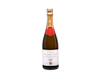
Château Figeac, Saint-Emilion 2016

Red Wine from France - Bordeaux
0 star rating 0 Reviews
Figeac is unique on Bordeaux’s right bank for its atypically high proportion of cabernet sauvignon and in great, warm vintages like 2016 it really shines. At a recent tasting of 2016s, this was our pick of the right bank, thanks to its density, energy, cassis-laden palate and incredible focus.
Price: £199.00 Bottle (£265.33/litre)
Price: £1,194.00 Case of 6 (£265.33/litre)
In Stock
Code: CS10311

Wine characteristics

  • Red Wine
  • Medium-bodied
  • Cabernet Merlot
  • 75cl
  • 2029 to 2043
  • 14% Alcohol
  • oak used but not v. noticeable
  • Cork, natural

Bestselling wines

St Emilion, Pomerol

Saint-Emilion

There is an ancient history of wine making in the area of St Emilion, with Roman viticulture attested to in the poetry of Ausonius after whom the Première Grand Cru Château Ausone is named. The vineyards and much visited town have been awarded UNESCO world heritage List status as a cultural landscape and are enjoying a period of particular dynamism and prosperity.

Merlot is the dominant grape here with cabernet franc in earnest support and some supporters of the more difficult to ripen cabernet sauvignon. The soils, damper and cooler than those of the Médoc, are responsible for this and merlot performs beautifully in the clay, limestone, gravel and other alluvial deposits that make up the vineyard soils. Much is made of the clay based soils of the area but the picture is a broader than that.

If we ignore the areas down by the river and on its flood plain and the satellites that we discuss elsewhere, there remain two main areas where the quality of the wines speaks for the...
Saint-Emilion

There is an ancient history of wine making in the area of St Emilion, with Roman viticulture attested to in the poetry of Ausonius after whom the Première Grand Cru Château Ausone is named. The vineyards and much visited town have been awarded UNESCO world heritage List status as a cultural landscape and are enjoying a period of particular dynamism and prosperity.

Merlot is the dominant grape here with cabernet franc in earnest support and some supporters of the more difficult to ripen cabernet sauvignon. The soils, damper and cooler than those of the Médoc, are responsible for this and merlot performs beautifully in the clay, limestone, gravel and other alluvial deposits that make up the vineyard soils. Much is made of the clay based soils of the area but the picture is a broader than that.

If we ignore the areas down by the river and on its flood plain and the satellites that we discuss elsewhere, there remain two main areas where the quality of the wines speaks for the terroir.

The first is up on the plateau that abuts the border with Pomerol. A continuation of the plateau of sand and gravel that defines the best wines of Pomerol, this area is home to the most sought after of all Saint-Emilions, Château Cheval Blanc. The second group of properties are to be found on an escarpment east of the town of Saint-Emilion, where a thin layer of topsoil overlays a bedrock of sandstone on south-facing slopes that end suddenly and precipitously. Though the best wines of the second group are less highly regarded than the best of the first group there are superb wines in both.

Unlike its Pomerol next door, the wines of Saint-Emilion have access to a classification system akin to that of the 1855 Médoc version. Established in 1955, the Saint-Emilion classification is redrawn every ten years, which always causes a legal rumpus as demoted properties seek redress for the insult. Wines are assessed on several criteria such as soils, aspect and vine age and are tasted for typicity. Once accepted at one of the three levels the wines are required to adhere to stricter appellation rules than their supposedly lesser fellow estates with regard to yields and ageing.

The levels of the classification begin with the Grand Cru Classé properties of which there are several hundred (there are 800 or so estates in Saint-Emilion in total). Above this is Première Grand Cru, with 18 member currently, and at the top the Premières Grands Crus (A) which consists of the Châteaux Cheval Blanc, Ausone, Angelus and Pavie, the latter two having been promoted in 2012.

At its best Saint-Emilion should be should be rich, full-coloured, spicy and apparently sweet, and the best properties balance these qualities with finesse length. No white wines are made.

Pomerol

Despite not having a classification system like the Médoc and Saint-Emilion, Pomerol has an enviable reputation for some of the very best Bordeaux wines that can fetch eye-watering prices. However, at its best Pomerol produces sublime wines with a rich, almost fleshy, velvety flavour. It's worth buying the best which are never cheap.

The appellation is tiny, only 785 hectares, but within this flat but bijou acreage there are a great number of small estates with few of the grand châteaux that crop up throughout other Bordeaux districts. The land is effectively a great bank rising in gentle terraces from the Dordogne and Isle rivers, consisting of a good deal of clay leavened by gravel and sand in varying quantities depending on where you stand. The sandiest slopes, making the lightest wines, are on the lower slopes close to the Dordogne, and the best terroir is considered to be up in the north-eastern corner where the clay is at its thickest. Here you will find the big names of the appellation such Châteaux Pétrus, La Fleur Pétrus, Lafleur and Vieux Château Certan. Nowhere is more than 40 metres above sea level.

Merlot is at least 80% of planting and is similarly represented in any blended wines, though many are pure merlot. Cabernet franc is runner up here, with cabernet sauvignon and malbec also permitted.

The influential Moueix family have been incredibly important in the development of Pomerol’s reputation as a fine wine appellation, both as négociants and as owners of some of the finest properties. Pétrus, Lafleur Pétrus, Hosanna and Providence are all under their ownership.
Read more

Château Figeac

This Saint-Emilion estate is steeped in history. It gets its name from the Figeacus family who owned the land here in the second century AD. Some of its doors and window frames date back to the 11th century, and some of its features – including one of the ageing cellars – are from the château’s 16th-century restoration.

It passed through several families over the years, and was rebuilt as we know it today in the 18th century. Since 1892 it has been in the hands of the Manoncourt family.

Much of its more recent success has been down to Thierry Manoncourt, who began his winemaking career there in 1943, and helped develop the wine’s distinctive, elegant style. It was under his leadership that the wine attained its Premier Grand Cru Classé status in 1955, and he is also responsible for the vineyard’s unique configuration, with almost equal parts merlot, cabernet franc and cabernet sauvignon, unmatched in the right bank.

Thierry and his wife Marie-France ran the estate until his death in 2010, assisted from the 1980s by their daughter Laure and her husband Eric d’Aramon. They left the property in 2011 but Marie-France is still in charge to this day, alongside her daughters, with winemaking and vineyard management in the hands of Frédéric Faye since 2002.

The vineyard – 40 hectares in a single block – is to the west of Saint-Emilion near its border with Pomerol, and covers Figeac’s famous three mounds of sandy gravel. This gravel is more commonly found on the left bank and accounts ...
This Saint-Emilion estate is steeped in history. It gets its name from the Figeacus family who owned the land here in the second century AD. Some of its doors and window frames date back to the 11th century, and some of its features – including one of the ageing cellars – are from the château’s 16th-century restoration.

It passed through several families over the years, and was rebuilt as we know it today in the 18th century. Since 1892 it has been in the hands of the Manoncourt family.

Much of its more recent success has been down to Thierry Manoncourt, who began his winemaking career there in 1943, and helped develop the wine’s distinctive, elegant style. It was under his leadership that the wine attained its Premier Grand Cru Classé status in 1955, and he is also responsible for the vineyard’s unique configuration, with almost equal parts merlot, cabernet franc and cabernet sauvignon, unmatched in the right bank.

Thierry and his wife Marie-France ran the estate until his death in 2010, assisted from the 1980s by their daughter Laure and her husband Eric d’Aramon. They left the property in 2011 but Marie-France is still in charge to this day, alongside her daughters, with winemaking and vineyard management in the hands of Frédéric Faye since 2002.

The vineyard – 40 hectares in a single block – is to the west of Saint-Emilion near its border with Pomerol, and covers Figeac’s famous three mounds of sandy gravel. This gravel is more commonly found on the left bank and accounts for the higher than usual proportion of cabernet sauvignon for a right bank property. It provides good natural drainage, and both absorbs and reflects the heat well, helping the grapes to ripen smoothly and fully.

Thierry spent decades painstakingly separating the vineyard into several different plots, and the estate’s winemaking continues this attention to detail: grapes are vinified in a selection of both stainless-steel tanks in various sizes and in open-topped conical oak vats. The wine is then aged in 100% new French oak barrels, sourced from up to eight different coopers, for 15 to 18 months.

Vintages of Figeac age superbly well, proving that this is one of the great estates of Saint-Emilion.
Read more

Bordeaux 2016 St Emilion Pomerol

Bordeaux has produced an abundance of superb wines in 2016. The reds exhibit real energy and vitality, with pure bouquets, plush silky tannins, plenty of mid-palate fruit and impressive length of flavour. Slightly lower-thanaverage alcohol levels, allied to the perfumed fruit and ripe tannins that typify the vintage, will ensure wines with exceptional balance and ageing potential. Comparisons of 2016 with previous vintages are hard to draw, and none of the owners and winemakers that we talked to during our visits were willing (or able) to suggest a similar vintage in terms of wine style. Nicolas Audebert, who makes the wines at Château Rauzan-Ségla, uses the description ‘un kilo de plumes’, or a pound of feathers for those preferring imperial measures, meaning that the wines have volume as opposed to weight. This comes closest to capturing the essence of the 2016s. Unlike last year, the successes of the 2016 vintage come from all corners of Bordeaux. Cabernets from the Médoc ripened...
Bordeaux has produced an abundance of superb wines in 2016. The reds exhibit real energy and vitality, with pure bouquets, plush silky tannins, plenty of mid-palate fruit and impressive length of flavour. Slightly lower-thanaverage alcohol levels, allied to the perfumed fruit and ripe tannins that typify the vintage, will ensure wines with exceptional balance and ageing potential. Comparisons of 2016 with previous vintages are hard to draw, and none of the owners and winemakers that we talked to during our visits were willing (or able) to suggest a similar vintage in terms of wine style. Nicolas Audebert, who makes the wines at Château Rauzan-Ségla, uses the description ‘un kilo de plumes’, or a pound of feathers for those preferring imperial measures, meaning that the wines have volume as opposed to weight. This comes closest to capturing the essence of the 2016s. Unlike last year, the successes of the 2016 vintage come from all corners of Bordeaux. Cabernets from the Médoc ripened beautifully from Margaux to Saint-Estèphe, as they did in PessacLéognan and the Graves, while both Pomerol and Saint-Emilion enjoyed a healthy, ripe merlot crop.

So-called second wines were almost uniformly excellent too. This is partly due to the fact that with cabernet sauvignon ripening so perfectly, many châteaux increased the proportion of that grape in their grand vin. The knock-on effect was that high-quality merlot grapes, normally destined for the first wine, ended up in the properties’ second wines, to their undoubted benefit.

One point of caution to note is that vineyards in some parts of Bordeaux this spring have been devastated by late frost (around 26th and 27th April), and consequently there will be little or no wine available from some châteaux in the 2017 vintage. The overused adage ‘buy now while stocks last’ may actually be relevant this year!
Read more

JancisRobinson.com

Tasted blind. Very deep crimson. Quite sweet, rich and charred. Rather glorious, luxurious fruit in beautiful harmony. Ch Cheval Blanc? Super-appetising even if not big. Dry finish. Subtle.

Tasted blind. Very deep crimson. Quite sweet, rich and charred. Rather glorious, luxurious fruit in beautiful harmony. Ch Cheval Blanc? Super-appetising even if not big. Dry finish. Subtle. JancisRobinson.com

Read more

Jancis Robinson MW

2016 vintage reviews
Back to top