}

“Château Grand Corbin-Despagne, Saint-Emilion 2011” is out of stock.

View original product description

This is a carousel with zoom. Use the thumbnails to navigate, or jump to a slide. Use the zoom button to zoom into a image.

Sold Out

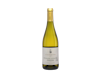
Château Grand Corbin-Despagne, Saint-Emilion 2011

0 star rating 0 Reviews
A fine 200th anniversary vintage for the Despagne family, from vineyards now fully organic, producing naturally healthy low yields. Merlot dominant but with 29% cabernet franc and just 1% cabernet sauvignon to add fragrance, finesse and structure.
Out of stock
Code: CS8581

Wine characteristics

  • Red Wine
  • Medium-bodied
  • Merlot
  • 75cl
  • Drinking now
  • 13.5% Alcohol
  • oak used but not v. noticeable
  • Cork, natural

Bestselling wines

St Emilion, Pomerol

Saint-Emilion

There is an ancient history of wine making in the area of St Emilion, with Roman viticulture attested to in the poetry of Ausonius after whom the Première Grand Cru Château Ausone is named. The vineyards and much visited town have been awarded UNESCO world heritage List status as a cultural landscape and are enjoying a period of particular dynamism and prosperity.

Merlot is the dominant grape here with cabernet franc in earnest support and some supporters of the more difficult to ripen cabernet sauvignon. The soils, damper and cooler than those of the Médoc, are responsible for this and merlot performs beautifully in the clay, limestone, gravel and other alluvial deposits that make up the vineyard soils. Much is made of the clay based soils of the area but the picture is a broader than that.

If we ignore the areas down by the river and on its flood plain and the satellites that we discuss elsewhere, there remain two main areas where the quality of the wines speaks for the...
Saint-Emilion

There is an ancient history of wine making in the area of St Emilion, with Roman viticulture attested to in the poetry of Ausonius after whom the Première Grand Cru Château Ausone is named. The vineyards and much visited town have been awarded UNESCO world heritage List status as a cultural landscape and are enjoying a period of particular dynamism and prosperity.

Merlot is the dominant grape here with cabernet franc in earnest support and some supporters of the more difficult to ripen cabernet sauvignon. The soils, damper and cooler than those of the Médoc, are responsible for this and merlot performs beautifully in the clay, limestone, gravel and other alluvial deposits that make up the vineyard soils. Much is made of the clay based soils of the area but the picture is a broader than that.

If we ignore the areas down by the river and on its flood plain and the satellites that we discuss elsewhere, there remain two main areas where the quality of the wines speaks for the terroir.

The first is up on the plateau that abuts the border with Pomerol. A continuation of the plateau of sand and gravel that defines the best wines of Pomerol, this area is home to the most sought after of all Saint-Emilions, Château Cheval Blanc. The second group of properties are to be found on an escarpment east of the town of Saint-Emilion, where a thin layer of topsoil overlays a bedrock of sandstone on south-facing slopes that end suddenly and precipitously. Though the best wines of the second group are less highly regarded than the best of the first group there are superb wines in both.

Unlike its Pomerol next door, the wines of Saint-Emilion have access to a classification system akin to that of the 1855 Médoc version. Established in 1955, the Saint-Emilion classification is redrawn every ten years, which always causes a legal rumpus as demoted properties seek redress for the insult. Wines are assessed on several criteria such as soils, aspect and vine age and are tasted for typicity. Once accepted at one of the three levels the wines are required to adhere to stricter appellation rules than their supposedly lesser fellow estates with regard to yields and ageing.

The levels of the classification begin with the Grand Cru Classé properties of which there are several hundred (there are 800 or so estates in Saint-Emilion in total). Above this is Première Grand Cru, with 18 member currently, and at the top the Premières Grands Crus (A) which consists of the Châteaux Cheval Blanc, Ausone, Angelus and Pavie, the latter two having been promoted in 2012.

At its best Saint-Emilion should be should be rich, full-coloured, spicy and apparently sweet, and the best properties balance these qualities with finesse length. No white wines are made.

Pomerol

Despite not having a classification system like the Médoc and Saint-Emilion, Pomerol has an enviable reputation for some of the very best Bordeaux wines that can fetch eye-watering prices. However, at its best Pomerol produces sublime wines with a rich, almost fleshy, velvety flavour. It's worth buying the best which are never cheap.

The appellation is tiny, only 785 hectares, but within this flat but bijou acreage there are a great number of small estates with few of the grand châteaux that crop up throughout other Bordeaux districts. The land is effectively a great bank rising in gentle terraces from the Dordogne and Isle rivers, consisting of a good deal of clay leavened by gravel and sand in varying quantities depending on where you stand. The sandiest slopes, making the lightest wines, are on the lower slopes close to the Dordogne, and the best terroir is considered to be up in the north-eastern corner where the clay is at its thickest. Here you will find the big names of the appellation such Châteaux Pétrus, La Fleur Pétrus, Lafleur and Vieux Château Certan. Nowhere is more than 40 metres above sea level.

Merlot is at least 80% of planting and is similarly represented in any blended wines, though many are pure merlot. Cabernet franc is runner up here, with cabernet sauvignon and malbec also permitted.

The influential Moueix family have been incredibly important in the development of Pomerol’s reputation as a fine wine appellation, both as négociants and as owners of some of the finest properties. Pétrus, Lafleur Pétrus, Hosanna and Providence are all under their ownership.
Read more

Château Grand Corbin Despagne

The Despagne family has been making wine in Saint-Emilion for seven generations. François Despagne took the reins in 1996, and his passion and intelligence have made his family property – a grand cru since the original classification in 1955 – one very much to follow.

History
The Despagne family is one of the oldest in Saint-Emilion, and they have documents showing that their family roots go back to the 17th century. They have not always been owners, but down the years have undertaken all sorts of wine-growing jobs. For example, they were often vineyard workers, day-labourers and ploughmen.

In 2012, the family celebrated the 200th anniversary at the Grand Corbin terroir. The current owner’s  ancestor Louis Despagne (whose family were smallholders at Cheval Blanc), purchased the first family parcels in 1812 at a place named Grand Corbin. His son extended the vineyard taking it from just a handful of hectares to around twenty, a surface area which has remained largely unchanged ever since.

The wines
The estate is near Saint-Emilion’s border with Pomerol. There are 30 hectares of vines on a mix of clay and sandstone soils, but François painstakingly analysed the vineyards and has identified 53 individual plots. He now adapts his viticulture to suit the needs of each parcel.

Grapes are hand-picked and vinified in 27 separate stainless-steel and cement tanks. The blend is 75% merlot, 24% cabernet franc and 1% cabernet sauvignon, and the...

The Despagne family has been making wine in Saint-Emilion for seven generations. François Despagne took the reins in 1996, and his passion and intelligence have made his family property – a grand cru since the original classification in 1955 – one very much to follow.

History
The Despagne family is one of the oldest in Saint-Emilion, and they have documents showing that their family roots go back to the 17th century. They have not always been owners, but down the years have undertaken all sorts of wine-growing jobs. For example, they were often vineyard workers, day-labourers and ploughmen.

In 2012, the family celebrated the 200th anniversary at the Grand Corbin terroir. The current owner’s  ancestor Louis Despagne (whose family were smallholders at Cheval Blanc), purchased the first family parcels in 1812 at a place named Grand Corbin. His son extended the vineyard taking it from just a handful of hectares to around twenty, a surface area which has remained largely unchanged ever since.

The wines
The estate is near Saint-Emilion’s border with Pomerol. There are 30 hectares of vines on a mix of clay and sandstone soils, but François painstakingly analysed the vineyards and has identified 53 individual plots. He now adapts his viticulture to suit the needs of each parcel.

Grapes are hand-picked and vinified in 27 separate stainless-steel and cement tanks. The blend is 75% merlot, 24% cabernet franc and 1% cabernet sauvignon, and the wine is aged for 18 months in oak, around 35 to 50% of which is new.

The aim here is to make a wine with freshness, elegance and richness that ages well for between six and 20 years. Older vintages such as 1943 and 1961 show the vineyards’ considerable quality and, following something of a dip in the 1990s, the excellent 2001 vintage signalled a return to form. The property has continued well since then.

Environmental sustainability
Since 1996, the vines have been grown according to integrated and sustainable farming principles. They are also certified to a number of sustainability standards including the Terra Vitis charter and HVE3 (High Environmental Value Level 3) certification.

No herbicides have ever been used. In 2004, they conducted trials on a part of the vineyard following the principles of organic farming, before converting fully to organic farming in 2010, and in 2013 they acquired organic certification. Since 2018 they have trialled a number of plots using biodynamic practices.

Read more

Bordeaux Vintage 2011

Nature threw many a challenge at Bordeaux growers in 2011 but the difficulties were faced down by diligent producers and many ripe, pure and traditionally styled clarets were made.

An early harvest, sometimes by two or three weeks in some cases, benefited from largely fine weather, without which the cabernet sauvignon would not have ripened sufficiently. Spring had been hot, to the point of some vines shutting down at one stage, and though flowering had been even there was some uneven ripening later. Indifferent weather in August meant that strict selection was required at the harvest. Those who were rigorous in the vineyard and the cellar have made classic clarets characterised by ripeness balanced by refreshing purity of fruit and fine, tight-knit tannins that return to a more traditional style of Bordeaux that many enthusiasts have missed in the previous couple of vintages.

Certainly the wines do not display the concentration and exuberance of 2009 and 2010, but there are...
Nature threw many a challenge at Bordeaux growers in 2011 but the difficulties were faced down by diligent producers and many ripe, pure and traditionally styled clarets were made.

An early harvest, sometimes by two or three weeks in some cases, benefited from largely fine weather, without which the cabernet sauvignon would not have ripened sufficiently. Spring had been hot, to the point of some vines shutting down at one stage, and though flowering had been even there was some uneven ripening later. Indifferent weather in August meant that strict selection was required at the harvest. Those who were rigorous in the vineyard and the cellar have made classic clarets characterised by ripeness balanced by refreshing purity of fruit and fine, tight-knit tannins that return to a more traditional style of Bordeaux that many enthusiasts have missed in the previous couple of vintages.

Certainly the wines do not display the concentration and exuberance of 2009 and 2010, but there are outstanding examples throughout Bordeaux. Saint-Julien and Pauillac performed particularly well, as did the most favoured sites of Pomerol and Saint-Emilion, though in every case the wines are fresher, more classically proportioned expression of Bordeaux than the two vintages that preceded it.

Some have likened the vintage to 2001 and that has turned out to be considerably better than expected, and other have assessed the vintage as being somewhere between 2004 and 2008 in style. Wines made by the best producers with great terroir, and the resources to ensure that the necessary care was taken in the vineyard and the cellar, have produced wines that will age well for many years to come. Most are likely to need more time in bottle than the 2012s or 2013s.

Sauternes and Barsac enjoyed their third excellent vintage in a row. The warm, humid conditions at the end of the season were a gift to these regions, whose winemakers have rarely seen such regular onset of noble rot. Here the rich but beautifully fresh style of the vintage makes for easier comparisons with the fine 2007, and perhaps the great 2001.
Read more

Decanter

(3* - Recommended)Pungent floral and peppery nuances and red berry aromas. Quite smooth on thepalate with tannins and acidity balanced.

- Panel Tasting

2011 vintage reviews
Back to top