}

This is a carousel with zoom. Use the thumbnails to navigate, or jump to a slide. Use the zoom button to zoom into a image.

Low stock

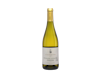
Château Larcis-Ducasse, Saint-Emilion 2019

0 star rating 0 Reviews
A Saint-Emilion with power, richness and complexity making the most of its great position on the slopes next to Château Pavie. A classic blend of 88% merlot and 12% cabernet franc. Drink from 2029 to 2041. 14.5%
Price: £62.00 Bottle (£82.67/litre)
Price: £372.00 Case of 6 (out of stock)
Low stock
Code: CS11751

Wine characteristics

  • Red Wine
  • Full-bodied
  • Merlot
  • 75cl
  • 2029 to 2041
  • 14.5% Alcohol
  • oak used but not v. noticeable
  • Cork, natural

Bestselling wines

St Emilion, Pomerol

Saint-Emilion

There is an ancient history of wine making in the area of St Emilion, with Roman viticulture attested to in the poetry of Ausonius after whom the Première Grand Cru Château Ausone is named. The vineyards and much visited town have been awarded UNESCO world heritage List status as a cultural landscape and are enjoying a period of particular dynamism and prosperity.

Merlot is the dominant grape here with cabernet franc in earnest support and some supporters of the more difficult to ripen cabernet sauvignon. The soils, damper and cooler than those of the Médoc, are responsible for this and merlot performs beautifully in the clay, limestone, gravel and other alluvial deposits that make up the vineyard soils. Much is made of the clay based soils of the area but the picture is a broader than that.

If we ignore the areas down by the river and on its flood plain and the satellites that we discuss elsewhere, there remain two main areas where the quality of the wines speaks for the...
Saint-Emilion

There is an ancient history of wine making in the area of St Emilion, with Roman viticulture attested to in the poetry of Ausonius after whom the Première Grand Cru Château Ausone is named. The vineyards and much visited town have been awarded UNESCO world heritage List status as a cultural landscape and are enjoying a period of particular dynamism and prosperity.

Merlot is the dominant grape here with cabernet franc in earnest support and some supporters of the more difficult to ripen cabernet sauvignon. The soils, damper and cooler than those of the Médoc, are responsible for this and merlot performs beautifully in the clay, limestone, gravel and other alluvial deposits that make up the vineyard soils. Much is made of the clay based soils of the area but the picture is a broader than that.

If we ignore the areas down by the river and on its flood plain and the satellites that we discuss elsewhere, there remain two main areas where the quality of the wines speaks for the terroir.

The first is up on the plateau that abuts the border with Pomerol. A continuation of the plateau of sand and gravel that defines the best wines of Pomerol, this area is home to the most sought after of all Saint-Emilions, Château Cheval Blanc. The second group of properties are to be found on an escarpment east of the town of Saint-Emilion, where a thin layer of topsoil overlays a bedrock of sandstone on south-facing slopes that end suddenly and precipitously. Though the best wines of the second group are less highly regarded than the best of the first group there are superb wines in both.

Unlike its Pomerol next door, the wines of Saint-Emilion have access to a classification system akin to that of the 1855 Médoc version. Established in 1955, the Saint-Emilion classification is redrawn every ten years, which always causes a legal rumpus as demoted properties seek redress for the insult. Wines are assessed on several criteria such as soils, aspect and vine age and are tasted for typicity. Once accepted at one of the three levels the wines are required to adhere to stricter appellation rules than their supposedly lesser fellow estates with regard to yields and ageing.

The levels of the classification begin with the Grand Cru Classé properties of which there are several hundred (there are 800 or so estates in Saint-Emilion in total). Above this is Première Grand Cru, with 18 member currently, and at the top the Premières Grands Crus (A) which consists of the Châteaux Cheval Blanc, Ausone, Angelus and Pavie, the latter two having been promoted in 2012.

At its best Saint-Emilion should be should be rich, full-coloured, spicy and apparently sweet, and the best properties balance these qualities with finesse length. No white wines are made.

Pomerol

Despite not having a classification system like the Médoc and Saint-Emilion, Pomerol has an enviable reputation for some of the very best Bordeaux wines that can fetch eye-watering prices. However, at its best Pomerol produces sublime wines with a rich, almost fleshy, velvety flavour. It's worth buying the best which are never cheap.

The appellation is tiny, only 785 hectares, but within this flat but bijou acreage there are a great number of small estates with few of the grand châteaux that crop up throughout other Bordeaux districts. The land is effectively a great bank rising in gentle terraces from the Dordogne and Isle rivers, consisting of a good deal of clay leavened by gravel and sand in varying quantities depending on where you stand. The sandiest slopes, making the lightest wines, are on the lower slopes close to the Dordogne, and the best terroir is considered to be up in the north-eastern corner where the clay is at its thickest. Here you will find the big names of the appellation such Châteaux Pétrus, La Fleur Pétrus, Lafleur and Vieux Château Certan. Nowhere is more than 40 metres above sea level.

Merlot is at least 80% of planting and is similarly represented in any blended wines, though many are pure merlot. Cabernet franc is runner up here, with cabernet sauvignon and malbec also permitted.

The influential Moueix family have been incredibly important in the development of Pomerol’s reputation as a fine wine appellation, both as négociants and as owners of some of the finest properties. Pétrus, Lafleur Pétrus, Hosanna and Providence are all under their ownership.
Read more

Château Larcis-Ducasse

This Saint-Emilion Grand Cru Classé property has been in the Gratiot family since 1893, but the wine did not properly reveal its full potential until 2002, when the current generation employed the talented team of Nicolas Thienpont and Stéphane Derenoncourt to manage the estate and make the wine.

This property’s 11 hectares of vines are extremely well located on the southern slopes of the Saint-Emilion plateau, next to Pavie, where the sunshine and clay-limestone soils lend themselves to beautiful ripeness. The vines have an average age of 35 years, and a variety of bedrocks allows for greater complexity, with the cabernet franc and merlot grapes planted according to the character of each part of the vineyards.

The grapes – which tend to be a blend of 78% merlot and 22% cabernet franc – undergo a gentle maceration to avoid over-extraction, before being aged for 18 months in oak, around 60% of which is new. A wine with the capacity to age gracefully for 10 to 20 years, Larcis-Ducasse has become a consistently excellent performer, giving sumptuous, full-bodied Saint-Emilion with real elegance and a fine bouquet.

Bordeaux Vintage 2019

Unusual circumstances. Unusual solutions. Visits to Bordeaux at harvest time by our Bordeaux buyer Tim Sykes showed him the potential of 2019 clarets, which carefully organised tastings in spring 2020 bore out with some wonderful wines. What’s more, the extraordinary circumstances of lockdown in 2020 made some châteaux offer much reduced prices. Two compelling reasons for regarding the vintage well as a buyer and drinker.

The 2019 Bordeaux vintage is unquestionably very good indeed, and for châteaux with their vines in the best terroirs, potentially excellent. Weather conditions overall were hot and dry, but the remarkable characteristic of the vintage is that the wines (both reds and white) have maintained freshness, with lovely cool, lifted fruit character. And whilst alcohol levels are above average for the past few years there is little evidence of this in the glass, thanks to a seam of fresh acidity running through the wines. Balance is the key to a great wine and the 2019s are...
Unusual circumstances. Unusual solutions. Visits to Bordeaux at harvest time by our Bordeaux buyer Tim Sykes showed him the potential of 2019 clarets, which carefully organised tastings in spring 2020 bore out with some wonderful wines. What’s more, the extraordinary circumstances of lockdown in 2020 made some châteaux offer much reduced prices. Two compelling reasons for regarding the vintage well as a buyer and drinker.

The 2019 Bordeaux vintage is unquestionably very good indeed, and for châteaux with their vines in the best terroirs, potentially excellent. Weather conditions overall were hot and dry, but the remarkable characteristic of the vintage is that the wines (both reds and white) have maintained freshness, with lovely cool, lifted fruit character. And whilst alcohol levels are above average for the past few years there is little evidence of this in the glass, thanks to a seam of fresh acidity running through the wines. Balance is the key to a great wine and the 2019s are harmoniously balanced.

Tim Sykes made two trips to Bordeaux last year during the harvest, once towards the end of September to visit the right bank appellations of Saint-Emilion and Pomerol, and then again during the second week of October for the Médoc, Graves and Sauternes. Both visits revealed an abundance of small, healthy grapes arriving at the cellar doors.

In normal years Tim would make two subsequent week-long trips to Bordeaux in April to taste the new vintage, but as we all know 2020 was not a normal year. Having been forced to cancel his trips he, like Bordeaux buyers around the world, was unable to visit individual châteaux to taste barrel samples of the 2019 vintage in the normal way, so instead he was sent, and tasted, dozens of samples here in the UK. Whilst this is not the same as tasting ‘sur place’, it enabled him to form an opinion of the individual wines and develop a clear overall picture of the style and quality of the vintage. Barrel samples of very young wines are fragile and transporting them any distance means that there is an increased chance of them deteriorating in transit. Tim therefore requested that all samples be drawn from barrel at the beginning of the week so that I could taste towards the end of the same week, thus minimising the risk of oxidation.

The 2019 growing season was not straightforward, and vineyard managers needed to be vigilant, but those who kept on top of things were rewarded with a fine and sizeable crop. In the winery, low-temperature fermentations and gentle extractions were the keys to producing attractively balanced wines.
Read more

2019 vintage reviews
Back to top