This is a carousel with zoom. Use the thumbnails to navigate, or jump to a slide. Use the zoom button to zoom into a image.

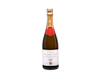
Louis Jadot, Bonnes Mares Grand Cru (Domaine) 2015

Red Wine from France - Burgundy
0 star rating 0 Reviews
Bonnes Mares is usually big and burly but this warm vintage has rounded off its hard angles to advantage. Jadot have two-thirds red clay soils, produces more powerful wines, and one-third clay and white limestone soils, which produce more elegant wines. A gentle giant. Low stock: offered in threes. 2030–2045.
Price: £325.00 Bottle (£433.33/litre)
Price: £975.00 Case of 3 (£433.33/litre)
In Stock
Code: BU64391

Wine characteristics

  • Red Wine
  • Medium-bodied
  • Pinot Noir
  • 75cl
  • 2030 to 2045
  • 13.5% Alcohol
  • oak used but not v. noticeable
  • Cork, natural

Bestselling wines

Côte de Nuits

Taking its name from the town at its heart, Nuits-St-Georges, the Côte de Nuits is the northern half of the Côte d’Or, the escarpment upon which lie the greatest of Burgundy’s vineyards. Though there are a number of very fine white wines made it is the reds for which the Côte de Nuits is truly famous. Compared with the red wines of the Côte de Beaune the reds from Nuits have more sophisticated tannins, extra body and a more sumptuous texture than their southern counterparts.

The soils of the area are predominantly limestone of various types, which is excellent for drainage but also retention of water. The finest have a happy conjunction of silt and scree over marl with protected and sunny aspects in some of the side-valleys that cut into the escarpment from west to east. These cuts provide a number of meso- and microclimates as well as the various aspects. The best sites are neither at the top or the bottom of these slopes where the soils are too impoverished or too fertile...
Taking its name from the town at its heart, Nuits-St-Georges, the Côte de Nuits is the northern half of the Côte d’Or, the escarpment upon which lie the greatest of Burgundy’s vineyards. Though there are a number of very fine white wines made it is the reds for which the Côte de Nuits is truly famous. Compared with the red wines of the Côte de Beaune the reds from Nuits have more sophisticated tannins, extra body and a more sumptuous texture than their southern counterparts.

The soils of the area are predominantly limestone of various types, which is excellent for drainage but also retention of water. The finest have a happy conjunction of silt and scree over marl with protected and sunny aspects in some of the side-valleys that cut into the escarpment from west to east. These cuts provide a number of meso- and microclimates as well as the various aspects. The best sites are neither at the top or the bottom of these slopes where the soils are too impoverished or too fertile respectively. More generic wines are produced at the top and bottom of these slopes, with the Premiers Crus and Grand Crus in a band running along the upper middle.

The climate here is semi-continental, though northerly winds can temper a hot summer while warmer winds from the south can bring warmth. Westerly winds that ultimately originate in the Atlantic can bring rain but at its worst may deliver devastating hail in incredibly localised storms. There is a degree of unpredictability about vintages in Burgundy that mean more variation than in any other fine wine region.

The appellations that sit above the generic regional ACs in the hierarchy are Marsannay, Fixin, Gevrey-Chambertin, Morey-St-Denis, Chambolle-Musigny, Vougeot, Vosne-Romanée, Echézaux and Nuits-St-George. Côte de Nuits –Villages is made from grapes grown at either end of the Côte, where the soils and sites are less impressive. Gevrey-Chambertin is a complete and balanced wine, full and harmonious. Wines from Nuits-St-Georges are the most tannic and, like Pommards, need long maturation. For many Vosne-Romanée is the summit. Its wines have beautiful velvety palates: dense and soft, sensuous and tactile. Chambolle-Musigny is the lightest yet one of the most fragrant wines of the Côte de Nuits. It is perhaps Nuits's equivalent of Volnay; a pretty, fine boned wine with exquisite perfume and a silky palate.
Read more

Domaine Georges Roumier

The core of this first-class domaine is 12 hectares of Chambolle-Musigny vines brought as a dowry by a local girl who married Georges Roumier in 1924. There are holdings in the finest of the Chambolle premiers crus, Les Amoureuses, at the southern or Musigny end of the commune, as well as Les Cras in the centre, and in the grands crus of Bonnes-Mares, Clos de Vougeot, Le Musigny and Corton-Charlemagne.

Since 1982 the estate has been run by the articulate, intelligent and quietly confident Christophe Roumier who has been responsible for propelling the wines to their current status. Christophe studied oenology at Dijon University and has achieved great standing on the Côte d’Or for his exceptional winemaking talent. Whilst consistency is key that is not to say that the approach is predetermined; each different growing season, and therefore, each crop treated accordingly with the wines expressing something of each vintage without its defects.

The vines are of a high average-age and naturally low yielding, without the need for excessive pruning or green harvesting. New oak is used sparingly to allow the fine flavours of Chambolle-Musigny to shine through. Christophe’s philosophy can be summed up best by his statement that “We don’t make pinot noir, we make wines from terroir which expresses itself through pinot noir.”

Burgundy 2015

2015 is an outstanding Burgundy vintage: a warm and dry year that has produced wines with very high levels of ripeness and power, but which remain beautifully balanced and fresh-tasting too. The quality of the grapes was as good as many growers had ever seen. Very small and uniformly ripe berries have ensured a high skin-to-pulp ratio, resulting in superb depth of flavour and supporting structure in both the reds and whites.

Reds: great, powerful and generous What is especially remarkable about the 2015 reds is the high quantity,
and superlative quality, of the tannins: sweet and saturated, they give the wines a rare density and concentration whilst maintaining a soft, velvety and gentle character. Furthermore, the wines appear fresh and not heavy, incomparable with previous warm vintages. The yield was down approximately 15–20% in the Côte de Nuits, and 20–30% in the Côte de Beaune. Alcohols are generally 13–13.5%, with only a handful higher than this. The flavours of these ripe and...
2015 is an outstanding Burgundy vintage: a warm and dry year that has produced wines with very high levels of ripeness and power, but which remain beautifully balanced and fresh-tasting too. The quality of the grapes was as good as many growers had ever seen. Very small and uniformly ripe berries have ensured a high skin-to-pulp ratio, resulting in superb depth of flavour and supporting structure in both the reds and whites.

Reds: great, powerful and generous What is especially remarkable about the 2015 reds is the high quantity,
and superlative quality, of the tannins: sweet and saturated, they give the wines a rare density and concentration whilst maintaining a soft, velvety and gentle character. Furthermore, the wines appear fresh and not heavy, incomparable with previous warm vintages. The yield was down approximately 15–20% in the Côte de Nuits, and 20–30% in the Côte de Beaune. Alcohols are generally 13–13.5%, with only a handful higher than this. The flavours of these ripe and seductive wines tend towards black cherries, mulberries perhaps, but the palate inevitably finishes with an attractive freshness. Many winemakers used a greater proportion of whole-bunch fermentation in 2015 which imbues the wines with greater vivacity. This technique allows for a naturally extended
pre-fermentation maceration (as the berries are slowly crushed by the weight of grapes in the vat), permitting an intra-cellular
fermentation in the grape berry which extracts increased colour.
Although this method analytically reduces acidity, one perceives wines made in this way as tasting fresher. Many maintain it contributes a rose-like aroma after some development in bottle. The quality and quantity of tannin means these will keep very well.

For whites 2015 is a vintage of ripe wines, some fresh and some powerful, but all very satisfying and balanced. All producers said that the quality of the grapes was one of the best they had ever seen and no sorting was necessary. It was a warm vintage, but not excessively hot like 2003, and the wines are fresher and better balanced than the 2009s. The combination of richness and structure has produced a wonderful vintage which will keep well.

In 2015 almost everything is good, geographically and hierarchically. The advantage of a warm year is that the lesser vineyards on cooler, damper, more clay-rich soils reach an unusually high and attractive level of ripeness. This means you can buy the Bourgognes and village wines with as much confidence as the premiers and grands crus.
Read more

2015 vintage reviews
Back to top