Château Mont-Pérat, 2011, Premières Côtes de Bordeaux is no longer available

This is a carousel with zoom. Use the thumbnails to navigate, or jump to a slide. Use the zoom button to zoom into a image.

Sold Out

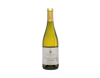
Château Mont-Pérat, 2011, Premières Côtes de Bordeaux

Red Wine from France - Bordeaux
0 star rating 0 Reviews
Thibault Despagne`s home property was the star of the family`s range in 2011. Mostly merlot, but with more cabernet franc than usual, pure bright fruit, and lovely, elegantly proportioned palate. A wine that outperforms its modest appellation.
is no longer available
Code: CB3941

Wine characteristics

  • Red Wine
  • Medium-bodied
  • Merlot
  • 13.5% Alcohol
  • oak used but not v. noticeable
  • Cork, natural

Bestselling wines

Bourg, Blaye, 1er Cotes

The best growers in the less-fashionable regions of the satellite appellations Blaye, Bourg, and the old Premières Côtes have to work that bit harder to get their wines known and the quality is often exceedingly high while the prices remain sensible.

Blaye is the northernmost of these satellites, named after the town of Blaye (pronounced ‘Bly’), which sits on the varied soils of the right-hand shore of the great Gironde estuary. Merlot dominates and the majority of the wines are soft and easy-drinking, balanced and flavourful, but without the dominance of new oak. The wines are usually ready to drink much sooner than those of neighbouring Bourg.

Côtes de Bourg is a smaller region south of Blaye, where the Dordogne joins the Garonne to become the Gironde. The soils here are more homogenously clay with limestone and the wines, though still generally merlot dominated, are more robust with delectable tannins, and they benefit from a little more time in bottle as a result. They can...
The best growers in the less-fashionable regions of the satellite appellations Blaye, Bourg, and the old Premières Côtes have to work that bit harder to get their wines known and the quality is often exceedingly high while the prices remain sensible.

Blaye is the northernmost of these satellites, named after the town of Blaye (pronounced ‘Bly’), which sits on the varied soils of the right-hand shore of the great Gironde estuary. Merlot dominates and the majority of the wines are soft and easy-drinking, balanced and flavourful, but without the dominance of new oak. The wines are usually ready to drink much sooner than those of neighbouring Bourg.

Côtes de Bourg is a smaller region south of Blaye, where the Dordogne joins the Garonne to become the Gironde. The soils here are more homogenously clay with limestone and the wines, though still generally merlot dominated, are more robust with delectable tannins, and they benefit from a little more time in bottle as a result. They can develop extremely well with short to mid-term cellaring.

Before the draining of the marshes of the Médoc in the 17th century it was these areas that provided a good deal of the wine exported to Britain.

Castillon adjoins Saint-Emilion to the east along the Dordogne and inland to the north. It is developing a good reputation for its wines and several prestigious producers from neighbouring appellations have invested a good deal to make wine here and too very good effect alongside a number of excellent locals such as Château de Pitray. Merlot again dominates on a mixture of soils from clay to sand and gravel, though cabernet sauvignon is also has a presence.

A wider umbrella appellation controlee called simply Côtes de Bordeaux identifies special terroirs, which includes Blaye and Castillon with one or two others on the banks of the two rivers Garonne and Dordogne. The vast majority of production is red, made mostly from merlot, and there are many excellent producers here, such as Denis Dubourdieu.
Read more

Vignobles Despagne

Vignobles Despagne is responsible for six Bordeaux properties, spanning 300 hectares, and is known for taking more care of its vines than some classed growths.

The family shines like a beacon in Entre-Deux-Mers. In 1990, it acquired Château Bel-Air Perponcher here, and has developed as high a reputation for its whites as its reds at this property. The vines, which are immaculately tended, comprise sauvignon blanc, semillon and muscadelle for the whites and merlot, cabernet sauvignon and cabernet franc for the reds and the company’s rosé. Vines have been cultivated organically since 2008.

The ‘grand vin’ here is 80% merlot, with 10% each of cabernet sauvignon and cabernet franc, and is aged in new oak barrels. Drink it between four to eight years after the vintage.

A lighter, unoaked wine (the Réserve) is also made, as well as a semillon-dominant white which is cool fermented to achieve a refreshing, aromatic character. The property’s rosé is made using cabernet sauvignon (plus around 30% merlot and a little cabernet franc), the grapes for which are picked at optimum ripeness to retain their freshness.

This property is run by Basaline Despagne, and her brother Thibault runs Château Mont-Perat, a fantastic example of a Premier Cotes de Bordeaux from the right bank of the Garonne. Acquired in 1998, the four splendidly positioned hills of vines here are managed by Jean-Pierre Cousinié.

A quarter of the estate is given to the white wine, which is typically a blend of 80% sauvignon ...
Vignobles Despagne is responsible for six Bordeaux properties, spanning 300 hectares, and is known for taking more care of its vines than some classed growths.

The family shines like a beacon in Entre-Deux-Mers. In 1990, it acquired Château Bel-Air Perponcher here, and has developed as high a reputation for its whites as its reds at this property. The vines, which are immaculately tended, comprise sauvignon blanc, semillon and muscadelle for the whites and merlot, cabernet sauvignon and cabernet franc for the reds and the company’s rosé. Vines have been cultivated organically since 2008.

The ‘grand vin’ here is 80% merlot, with 10% each of cabernet sauvignon and cabernet franc, and is aged in new oak barrels. Drink it between four to eight years after the vintage.

A lighter, unoaked wine (the Réserve) is also made, as well as a semillon-dominant white which is cool fermented to achieve a refreshing, aromatic character. The property’s rosé is made using cabernet sauvignon (plus around 30% merlot and a little cabernet franc), the grapes for which are picked at optimum ripeness to retain their freshness.

This property is run by Basaline Despagne, and her brother Thibault runs Château Mont-Perat, a fantastic example of a Premier Cotes de Bordeaux from the right bank of the Garonne. Acquired in 1998, the four splendidly positioned hills of vines here are managed by Jean-Pierre Cousinié.

A quarter of the estate is given to the white wine, which is typically a blend of 80% sauvignon and 20% semillon, although in some vintages a small amount of muscadelle is also included. This is fermented in French oak, around half of which is new, before being matured in oak for a further eight months. The red is normally 70% merlot with the remainder made up of 20% cabernet sauvignon and 10% cabernet franc. This is aged in oak, 50% of which is new, for seven to ten months, and will keep well for four to 12 years. Mont-Perat was featured in a Japanese Manga publication called Drops of God, in which drinking it was compared to attending a Queen concert, and the wine has subsequently developed an enormous Asian following.

The talented Joël Elissalde is the oenologist here, and has been since 1987, and his hard work over the years means that Mont-Perat could often pass for a much more expensive wine. He also works with Thibault on Girolate, a superb 100% merlot wine that is a consistent hit with the critics.

There are 10 hectares of Girolate vines, planted on south-facing limestone slopes, much like those in Saint-Emilion. Each parcel of vines is fermented separately in oak barrels which are rotated twice a day to soften the wine’s tannins.

The Despagne family also owns and runs Château Tour de Mirambeau, Château Rauzan Despagne and Château Lion Beaulieu. Both the Despagne family and its team are constantly striving for improvement, and Vignobles Despagnes has earned much well-deserved respect over the years, as well as a popular place in the tastes of Society members.
Read more

Bordeaux Vintage 2011

Nature threw many a challenge at Bordeaux growers in 2011 but the difficulties were faced down by diligent producers and many ripe, pure and traditionally styled clarets were made.

An early harvest, sometimes by two or three weeks in some cases, benefited from largely fine weather, without which the cabernet sauvignon would not have ripened sufficiently. Spring had been hot, to the point of some vines shutting down at one stage, and though flowering had been even there was some uneven ripening later. Indifferent weather in August meant that strict selection was required at the harvest. Those who were rigorous in the vineyard and the cellar have made classic clarets characterised by ripeness balanced by refreshing purity of fruit and fine, tight-knit tannins that return to a more traditional style of Bordeaux that many enthusiasts have missed in the previous couple of vintages.

Certainly the wines do not display the concentration and exuberance of 2009 and 2010, but there are...
Nature threw many a challenge at Bordeaux growers in 2011 but the difficulties were faced down by diligent producers and many ripe, pure and traditionally styled clarets were made.

An early harvest, sometimes by two or three weeks in some cases, benefited from largely fine weather, without which the cabernet sauvignon would not have ripened sufficiently. Spring had been hot, to the point of some vines shutting down at one stage, and though flowering had been even there was some uneven ripening later. Indifferent weather in August meant that strict selection was required at the harvest. Those who were rigorous in the vineyard and the cellar have made classic clarets characterised by ripeness balanced by refreshing purity of fruit and fine, tight-knit tannins that return to a more traditional style of Bordeaux that many enthusiasts have missed in the previous couple of vintages.

Certainly the wines do not display the concentration and exuberance of 2009 and 2010, but there are outstanding examples throughout Bordeaux. Saint-Julien and Pauillac performed particularly well, as did the most favoured sites of Pomerol and Saint-Emilion, though in every case the wines are fresher, more classically proportioned expression of Bordeaux than the two vintages that preceded it.

Some have likened the vintage to 2001 and that has turned out to be considerably better than expected, and other have assessed the vintage as being somewhere between 2004 and 2008 in style. Wines made by the best producers with great terroir, and the resources to ensure that the necessary care was taken in the vineyard and the cellar, have produced wines that will age well for many years to come. Most are likely to need more time in bottle than the 2012s or 2013s.

Sauternes and Barsac enjoyed their third excellent vintage in a row. The warm, humid conditions at the end of the season were a gift to these regions, whose winemakers have rarely seen such regular onset of noble rot. Here the rich but beautifully fresh style of the vintage makes for easier comparisons with the fine 2007, and perhaps the great 2001.
Read more

2011 vintage reviews
Back to top