}

This is a carousel with zoom. Use the thumbnails to navigate, or jump to a slide. Use the zoom button to zoom into a image.

New

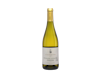
Château Phélan-Ségur, Saint-Estèphe 2019

Red Wine from France - Bordeaux
0 star rating 0 Reviews
This property`s wines show the finesse and bouquet some Saint-Estèphes lack. The 2019 has great promise with lovely scented fruit, mid-palate and length. Made from 56% cabernet sauvignon and 42% merlot, with a dash of cabernet franc. Drink from 2027 to 2039. 14.5%
Price: £49.00 Bottle (£65.33/litre)
Price: £294.00 Case of 6 (£65.33/litre)
In Stock
Code: CM24781

Wine characteristics

  • Red Wine
  • Medium-bodied
  • Cabernet Merlot
  • 75cl
  • 2027 to 2039
  • 14% Alcohol
  • oak used but not v. noticeable
  • Cork, natural

Bestselling wines

Medoc, Graves

Médoc, Graves and Pessac-Léognan areas, located on the left bank of the Garonne, are synonymous with well-structured, full-bodied but elegant red wines dominated by cabernet sauvignon which grows well in the predominantly gravelly soil of the area. As cabernet grapes are high in tannins, the wines usually have excellent ageing potential and are usually blended, principally with merlot as well as petit verdot, cabernet franc and malbec in much smaller quantities. When young, the wines can have a mulberry-purple colour, aromas of blackcurrant, cedar and cigar box, and a dry, tannic finish.

The Médoc

The Médoc is the 40 kilometre long tongue of land north of the city of Bordeaux jutting out to sea to form the southern shore of the estuary. It comprises two parts divided along a line just north of the St-Estèphe commune. To the north of this line lies the area called Bas Médoc (though more commonly simply Médoc), while south of the line is the Haut-Médoc. All the wines, north and south,...
Médoc, Graves and Pessac-Léognan areas, located on the left bank of the Garonne, are synonymous with well-structured, full-bodied but elegant red wines dominated by cabernet sauvignon which grows well in the predominantly gravelly soil of the area. As cabernet grapes are high in tannins, the wines usually have excellent ageing potential and are usually blended, principally with merlot as well as petit verdot, cabernet franc and malbec in much smaller quantities. When young, the wines can have a mulberry-purple colour, aromas of blackcurrant, cedar and cigar box, and a dry, tannic finish.

The Médoc

The Médoc is the 40 kilometre long tongue of land north of the city of Bordeaux jutting out to sea to form the southern shore of the estuary. It comprises two parts divided along a line just north of the St-Estèphe commune. To the north of this line lies the area called Bas Médoc (though more commonly simply Médoc), while south of the line is the Haut-Médoc. All the wines, north and south, are made within a band no more than 10 kilometres wide at its broadest.

The Bas Médoc, centred on the town of Lesparre, is made up of more clay and sand than its southern neighbour, interspersed with outcrops of the gravel for which the Haut-Médoc is famous. The climate in the peninsula, moderated by the estuary and sheltered by the great Landes forest to the west, is the mildest of any in Bordeaux though also the wettest after Graves.

In the north many estimable red wines are made and there are numerous properties classed as cru bourgeois, a malleable classification which places properties just below the Grand Cru level, using the classic blend of merlot and cabernet, but it is to the south in the Haut-Médoc that the most prestigious wines are made.

The communes of St-Estèphe, Pauillac, St-Julien, Margaux, Listrac and Moulis are contained within the Haut-Médoc, and wines that are not fortunate enough to find themselves within one of these communes may label themselves Haut-Médoc AC. However, any student of Bordeaux knows that some of the most famous wines in the world are produced in the communes named above. All but one of the five Premier Grand Cru Classé wines of the almost mythical 1855 classification are located here, with three alone sitting in Pauillac.

The soils of the Haut-Médoc are often characterised as gravelly, and indeed there is a significant amount of gravel throughout, in outcrops known as croupes, and much of the success of the great classified estate is attributed to this terroir even though the story of the soil types hereabouts is rather more complex. Gravel is free draining as well as warm in the summer and it is this, in an alliance with the influence of the estuary, that allows cabernet sauvignon to ripen sufficiently. The closer the estate to the estuary the sooner the grapes can ripen, sometimes as much as five or six days earlier than those eight to nine kilometres inland. Though the soils drain freely this causes the vine roots to delve deeply in search of water. This is an asset in regulating the supply of water to the vines which is now regarded as the key to producing high quality fruit.

The land of the Médoc and Haut-Médoc is less fragmented than that of its main rival for the affections of lovers of the finest wines, Burgundy, and estates boundaries can be somewhat more fluid as the reputation of the property is not so bound up in the precise area of terroir it occupies. For example, if Château Margaux were to acquire some vines from a neighbouring property within the commune it could quite legally add those vines to those that supply grapes for their grand vin without it affecting its classification status. As such estates here can occupy quite large tracts of land in comparison with most Burgundy producers.

Graves & Pessac-Léognan

The Graves region lies around the west and south of the city of Bordeaux, and as the name suggests, is famous for the gravelly nature of the soils. Actually there is sandy soil here too but the same free draining, warming characteristics apply as further north. Since 1987 the area has been split , with the creation of the Pessac-Léognan appellation removing the estates north of the town of La Brède and up to Bordeaux itself. This split left Graves without nearly all of its most prestigious properties, including its only Premier Grand Cru Classé in Château Haut-Brion, and a somewhat reduced reputation in the eyes of the public. Much excellent red and white wine is made here on estates that often lie in clearings among the almost ubiquitous pine forests of the area.

Pessac-Léognan is blessed with deeper, more gravelly terroir than its erstwhile compatriot appellation to the south, and has a cru classé system introduced in 1955 that, while younger and less regarded by some than the 1855 version, is at least reviewed occasionally and allows for the recognition of new quality and the demotion of the lacklustre. The classification recognises both red and white wines.

Classified Red Wines of Graves - Château Bouscaut, Château Haut-Bailly, Château Carbonnieux, Domaine de Chevalier, Château de Fieuzal, Château Olivier, Château Malartic-Lagravière, Château La Tour-Martillac, Château Smith-Haute-Lafitte, Château Haut-Brion, Château La Mission-Haut-Brion, Château Pape-Clément, Château Latour-Haut-Brion.

Classified White Wines of Graves - Château Bouscaut, Château Carbonnieux, Domaine de Chevalier, Château Olivier, Château Malartic-Lagravière, Château La Tour-Martillac, Château Laville-Haut Brion, Château Couhins-Lurton, Château Couhins, Château Haut-Brion.

As mentioned above, the brightest star in the Pessac constellation is Haut-Brion, with a reputation as one of the first Bordeaux châteaux to successfully emerge as what might these days be called a Brand, and is mentioned with pleasure by Samuel Pepys in his diary in 1660. The encroachment of the city has surrounded Haut-Brion, La Mission Haut-Brion and Pape-Clément and a good deal of prime vineyard area has been devoured by this relentless urban creep. Though mostly red wine is made there, the white wines of Pessac-Léognan have a very fine reputation, as intimated by the classification above, and are made from a blend of sauvignon and semillon with occasional additions of muscadelle, usually aged in oak and with great potential for ageing.
Read more

Château Phélan Ségur

It was an Irishman, Bernard Phelan, who established Château Phélan-Ségur in the early nineteenth century, after combining two smaller estates here in what is now the St. Estèphe appellation on Bordeaux’s left bank.

Prior to his ownership, the estates had been managed by the Count of Ségur, who was also known as ‘prince of the vines’, and had managed soon-to-be first growth properties such as Lafite and Latour. Bernard was a great entrepreneur and both he and his successor, his son Frank, established Phélan-Ségur as an exceptional model of its kind. Rather unusually, Bernard decided when extending the property to add the new agricultural buildings (such as the cellar, storerooms and winemaking buildings) as an extension to the original château, creating one unified whole.

After Bernard and Frank died, the château changed hands over the years, until eventually it was bought by Xavier Gardinier in the early 1980s. He and his sons, Thierry and Laurent, renovated the entire property, bringing production methods in line with modern technology. In 2017 the family sold the estate to Belgian shipping magnate Philippe Van de Vyvere, who will retain the services of the director under the Gardiniers, Veronique Dausse, when he takes the reins inearly 2018.

The property is situated to the east of Saint-Estèphe, and borders Château Montrose and Château Calon-Ségur, as well as the Gironde estuary. The estate now stands at 70 hectares of vines, with an average age of 30 years, 60% of which are ...
It was an Irishman, Bernard Phelan, who established Château Phélan-Ségur in the early nineteenth century, after combining two smaller estates here in what is now the St. Estèphe appellation on Bordeaux’s left bank.

Prior to his ownership, the estates had been managed by the Count of Ségur, who was also known as ‘prince of the vines’, and had managed soon-to-be first growth properties such as Lafite and Latour. Bernard was a great entrepreneur and both he and his successor, his son Frank, established Phélan-Ségur as an exceptional model of its kind. Rather unusually, Bernard decided when extending the property to add the new agricultural buildings (such as the cellar, storerooms and winemaking buildings) as an extension to the original château, creating one unified whole.

After Bernard and Frank died, the château changed hands over the years, until eventually it was bought by Xavier Gardinier in the early 1980s. He and his sons, Thierry and Laurent, renovated the entire property, bringing production methods in line with modern technology. In 2017 the family sold the estate to Belgian shipping magnate Philippe Van de Vyvere, who will retain the services of the director under the Gardiniers, Veronique Dausse, when he takes the reins inearly 2018.

The property is situated to the east of Saint-Estèphe, and borders Château Montrose and Château Calon-Ségur, as well as the Gironde estuary. The estate now stands at 70 hectares of vines, with an average age of 30 years, 60% of which are dedicated to cabernet sauvignon, 30% of which are merlot, and the remainder is mostly cabernet franc. Thanks to the proximity to the estuary, soils are generally gravelly alluvial soils, which provide good drainage.

The vines are intensely managed, with action taken throughout the year to ensure they are as healthy as possible, and ready to give the finest expression of their character. All grapes are harvested by hand separately according to each different plot.

The winery was renovated in 2011 and now boasts smaller vats, meaning much more precise parcels of vines can be vinified, allowing even greater complexity and character. Grapes are sorted by hand prior to destemming and crushing, and are then fermented in stainless-steel temperature-controlled vats that are double walled for extra thermal precision. Malolactic fermentation takes two to four weeks, after which the wine is blended: for Phélan-Ségur, this is one of the most crucial aspects of the entire process. This is very much a team effort, involving the winemakers, consultants and vineyard managers, with the aim being to achieve the best possible expression of the vintage.

The type of oak used changes every year, coming from different forests or undergoing different toasting methods, and this further enhances the character of the vintage. 50 to 60% of the oak is generally new, and the various batches of wine are aged separately until the final blending. The estate’s Grand Vin ages for 14 to 18 months, whereas the second wine, Frank de Phélan, and the estate’s other, cabernet-dominant wine, La Croix Bonis, both remain in barrel for 12 months.

Even the type of cork selected for bottling varies each year. This incredible attention to detail produces wines of great finesse and elegance with the potential to age for up to 15 years.
Read more

Bordeaux Vintage 2019

Unusual circumstances. Unusual solutions. Visits to Bordeaux at harvest time by our Bordeaux buyer Tim Sykes showed him the potential of 2019 clarets, which carefully organised tastings in spring 2020 bore out with some wonderful wines. What’s more, the extraordinary circumstances of lockdown in 2020 made some châteaux offer much reduced prices. Two compelling reasons for regarding the vintage well as a buyer and drinker.

The 2019 Bordeaux vintage is unquestionably very good indeed, and for châteaux with their vines in the best terroirs, potentially excellent. Weather conditions overall were hot and dry, but the remarkable characteristic of the vintage is that the wines (both reds and white) have maintained freshness, with lovely cool, lifted fruit character. And whilst alcohol levels are above average for the past few years there is little evidence of this in the glass, thanks to a seam of fresh acidity running through the wines. Balance is the key to a great wine and the 2019s are...
Unusual circumstances. Unusual solutions. Visits to Bordeaux at harvest time by our Bordeaux buyer Tim Sykes showed him the potential of 2019 clarets, which carefully organised tastings in spring 2020 bore out with some wonderful wines. What’s more, the extraordinary circumstances of lockdown in 2020 made some châteaux offer much reduced prices. Two compelling reasons for regarding the vintage well as a buyer and drinker.

The 2019 Bordeaux vintage is unquestionably very good indeed, and for châteaux with their vines in the best terroirs, potentially excellent. Weather conditions overall were hot and dry, but the remarkable characteristic of the vintage is that the wines (both reds and white) have maintained freshness, with lovely cool, lifted fruit character. And whilst alcohol levels are above average for the past few years there is little evidence of this in the glass, thanks to a seam of fresh acidity running through the wines. Balance is the key to a great wine and the 2019s are harmoniously balanced.

Tim Sykes made two trips to Bordeaux last year during the harvest, once towards the end of September to visit the right bank appellations of Saint-Emilion and Pomerol, and then again during the second week of October for the Médoc, Graves and Sauternes. Both visits revealed an abundance of small, healthy grapes arriving at the cellar doors.

In normal years Tim would make two subsequent week-long trips to Bordeaux in April to taste the new vintage, but as we all know 2020 was not a normal year. Having been forced to cancel his trips he, like Bordeaux buyers around the world, was unable to visit individual châteaux to taste barrel samples of the 2019 vintage in the normal way, so instead he was sent, and tasted, dozens of samples here in the UK. Whilst this is not the same as tasting ‘sur place’, it enabled him to form an opinion of the individual wines and develop a clear overall picture of the style and quality of the vintage. Barrel samples of very young wines are fragile and transporting them any distance means that there is an increased chance of them deteriorating in transit. Tim therefore requested that all samples be drawn from barrel at the beginning of the week so that I could taste towards the end of the same week, thus minimising the risk of oxidation.

The 2019 growing season was not straightforward, and vineyard managers needed to be vigilant, but those who kept on top of things were rewarded with a fine and sizeable crop. In the winery, low-temperature fermentations and gentle extractions were the keys to producing attractively balanced wines.
Read more

2019 vintage reviews
Back to top