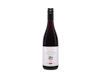
Although Montenegrin wines aren't yet widely available, the vranac grape has been winning the country awards for over one hundred years: it won its first accolade at the 1907 London Exhibition.
The history of Montenegrin wine production is shorter than that of most wine-producing countries: it wasn't really until the early sixties that it was legally separated from other fruit-growing agriculture when the Agricultural Industrial Plant was established. At this time, Plantaže was formed, and since 1965 they have impressively managed to keep increasing both production levels and quality standards throughout wars, the dissolution of countries and realignment of borders, and the many various resulting legal and economic difficulties.
In the early 1970s, the Workers' Council of the Agricultural Industrial Plant decided they wanted to develop in earnest a large proportion of land for the cultivation of wine grapes. After years of planning and several million dollars of funding, this dream began to take shape, and between 1977 and 1982 the barren soil of Cemovsko was transformed into one of the Balkans' best vineyard sites.
They began with 200 hectares of vineyards and a suitably modest winery. Today they cultivate 2,310 hectares - the largest surface area in Europe to be farmed by a single organisation - and have three wineries equipped with the latest cold storage technologies. Not all of the land is dedicated to wine production, however: they also make brandy, grow peaches, and...
Although Montenegrin wines aren't yet widely available, the vranac grape has been winning the country awards for over one hundred years: it won its first accolade at the 1907 London Exhibition.
The history of Montenegrin wine production is shorter than that of most wine-producing countries: it wasn't really until the early sixties that it was legally separated from other fruit-growing agriculture when the Agricultural Industrial Plant was established. At this time, Plantaže was formed, and since 1965 they have impressively managed to keep increasing both production levels and quality standards throughout wars, the dissolution of countries and realignment of borders, and the many various resulting legal and economic difficulties.
In the early 1970s, the Workers' Council of the Agricultural Industrial Plant decided they wanted to develop in earnest a large proportion of land for the cultivation of wine grapes. After years of planning and several million dollars of funding, this dream began to take shape, and between 1977 and 1982 the barren soil of Cemovsko was transformed into one of the Balkans' best vineyard sites.
They began with 200 hectares of vineyards and a suitably modest winery. Today they cultivate 2,310 hectares - the largest surface area in Europe to be farmed by a single organisation - and have three wineries equipped with the latest cold storage technologies. Not all of the land is dedicated to wine production, however: they also make brandy, grow peaches, and have a huge fishpond from which they supply Californian trout.
Plantaže describes the land as 'a goldmine of nature.' At 30km from the southern Adriatic coast, they have particularly hot, dry summers and colder winters, and the vineyards receive 10 to 12 hours of sunshine a day, an impressive 290 days a year. The chalky limestone soils benefit from drip irrigation, and large pebbles retain heat that can be released to the vines at night.
The vranac grape - the most crucial to the production of Montenegro's best wines - grows in small clusters of berries that have a high sugar content. The grape's character, combined with the vineyards' climate, produces aromatic, full-bodied, high-alcohol wines. The harvest normally takes place during the last week of August, and the grapes are almost entirely hand-harvested by a huge team of 2,000 workers.